
wooden spiral staircase needs coir or sisal stair treads
About This Project
Do you love your spiral staircase but worry about its unique, tapered steps? You're not alone. This guide provides the solution, walking you through the simple process of measuring for custom-fit stair treads. Because every spiral step is unique, creating a template for each one is the key to achieving a professional, secure fit. We'll show you how to get precise measurements, ensuring your new treads elevate your staircase with safety and style.
Steps

Gather Your Templating Tools
15 minutesTo guarantee a perfect fit for your custom-made treads, you'll need a few key items. A flexible measuring tape is essential for following the curves of your steps. A protractor or angle finder will help capture the exact angle of each tread's taper. A level ensures your reference points are consistent. Finally, sturdy cardboard or kraft paper is the ideal material for creating the precise, life-sized templates that will guide our work.
Watch: Create Template for First Winder Step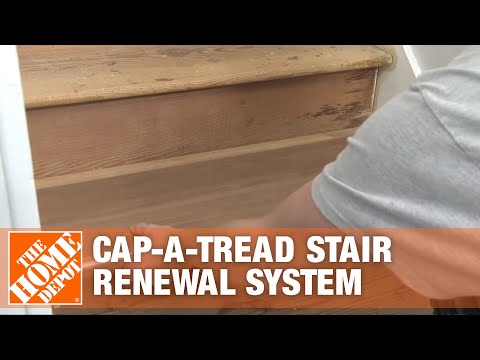
Measure Each Unique Tread
60 minutesBecause no two spiral steps are exactly alike, we need to measure each one individually. Using your flexible tape, measure the width across the widest part of the tread (usually the outer edge). Next, measure the depth from the very front of the step's edge (the nosing) to the back. Use your protractor to find the curve's angle. For a truly professional outcome, it's crucial to measure from the same reference points on every single step.
Watch: Measure Treads and Mark LaminateCreate and Label Your Templates
90 minutesThis is the step that ensures your treads are custom-made to fit perfectly. Lay your cardboard or kraft paper on a step and trace its exact shape, making sure to include the front nosing. Carefully cut out the template. The most important part is to clearly label each template with its corresponding step number (e.g., 'Step 1 - Bottom', 'Step 2', etc.) to avoid any mix-ups. Once you have a complete, labeled set, take clear photos of them. This gives you a great backup and helps us ensure perfection when you send the physical templates in with your order.
Watch: Create Template for First Winder StepFrequently Asked Questions
What specific tools and materials will I need for creating templates for my spiral stair treads?
You'll primarily need large sheets of sturdy paper or thin cardboard (like poster board), a pencil, a straight edge or ruler, and scissors or a utility knife. For securing the final treads, consider a strong adhesive suitable for your chosen material and wood, or non-slip rug tape.
Are there any specific safety precautions I should take when working on a spiral staircase?
Yes, working on a spiral staircase can be awkward. Ensure the area is well-lit and clear of obstructions. Take your time, especially when bending or reaching, and consider having a helper. If using a utility knife, always cut away from your body and wear appropriate hand protection.
How much time should I set aside for templating all the steps of a typical spiral staircase?
For a beginner, templating each unique step can take significant time. Budget at least 15-30 minutes per step, plus extra for double-checking and refining. For an average 12-14 step spiral staircase, expect to spend a full afternoon or even a weekend just on the templating process.
What's the biggest mistake people make when templating tapered spiral stair treads, and how can I avoid it?
The most common mistake is not getting the exact taper and curve right, leading to gaps. To avoid this, trace precisely along the edges of each step, and ensure your template accounts for the inner and outer curves. Label each template clearly (e.g., "Step 1 Bottom Left") to prevent mix-ups.
Can I use materials other than coir or sisal for these custom-fit stair treads?
Absolutely! While coir and sisal are popular for their durability and natural look, you could also use carpet tiles, vinyl flooring cut to shape, or even rubber matting. The key is to choose a material that can be cut accurately to your templates and offers good traction.
What's a general cost estimate for materials like coir or sisal and adhesive for a typical spiral staircase?
The cost can vary widely based on the material quality and quantity needed. Expect to spend $100-$300 for coir or sisal runner material (you'll buy it in bulk and cut it), plus $20-$50 for a good quality adhesive or heavy-duty carpet tape. Factor in the cost of templating materials, which are usually minimal.
What's the best way to secure the finished coir or sisal treads to ensure they don't slip on the wooden steps?
For maximum security, use a strong, flexible adhesive designed for carpet-to-wood applications. Apply it evenly to the back of the tread, especially around the edges. As an alternative or in addition, consider using high-quality double-sided carpet tape, particularly non-slip varieties, for a strong bond that's less permanent than glue.