

Stair Tread Measurement
About This Project
Ready to elevate your staircase? The first step in any easy DIY stair remodel is getting the measurements right. Achieving that perfect, custom-made fit is simpler than you think, and it's the secret to ensuring both safety and style. This guide will walk you through measuring each step's width and depth, because even in newer homes, slight variations can exist. Taking a few moments to measure carefully guarantees your new treads will look like they were always meant to be there.
Steps
Step 1: Determine Your Tread Depth
5 minutesUsing a rigid tape measure, press one end firmly against the vertical panel at the back of the step (this is called the 'riser'). Extend the tape straight across the flat part of the step and over the rounded front edge, known as the 'nosing'. For a perfect fit, it's crucial that your measurement captures the bare wood only. Be sure not to measure over old paint drips, leftover adhesive, or remnants of old carpet, as this can throw off the final fit. Write down this depth measurement for your first step.

Step 2: Find Your Tread Width
5 minutesMeasure the width of your step from side to side, keeping the tape measure parallel to the back riser. If your stairs run between two walls, measure the full wall-to-wall distance. If one or both sides are open, simply measure the full width of the wood. A popular, design-conscious choice is to leave a small border of wood visible on each side of the carpet tread. For example, on a 36-inch wide stair, a 34-inch tread leaves a lovely 1-inch border on each side, framing the tread beautifully. Record this width measurement for the step.
Watch: Measure Stair Tread Width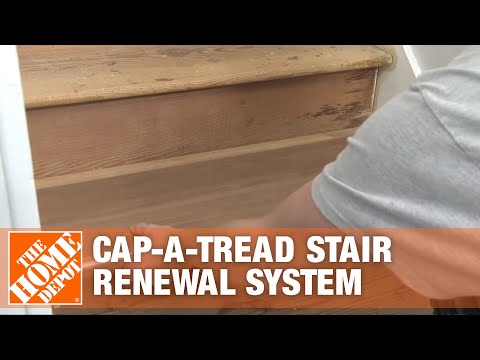
Step 3: Document and Double-Check Everything
10 minutesIn your notebook, create a simple list from top to bottom, recording the width and depth for each step. Don't be surprised if the numbers vary slightly—it's common, especially in older homes! If you find a step with unique dimensions, place a small piece of masking tape on its riser and number it to match your notes. This simple organization provides peace of mind. If you're ordering custom-made treads, taking a quick photo of each unique step with your notes can be incredibly helpful. Finally, take a moment to double-check all your numbers. A few extra seconds here ensures a flawless result you'll be proud of.
Watch: Measure Treads and Mark LaminateFrequently Asked Questions
What tools are essential for accurately measuring stair treads?
You'll primarily need a reliable tape measure (a locking one is very helpful), a straight edge or speed square, a pencil, and a notepad. For stairs that might not be perfectly square, a combination square or even a digital angle finder can provide extra precision for angles.
Why do I need to measure every single stair tread, even if they look identical?
Even in newer homes, slight variations in width, depth, or angle are very common due to settling or original construction. Measuring each tread individually ensures a custom, snug fit for your new treads, preventing unsightly gaps, dangerous overhangs, or issues during installation that could compromise safety and appearance.
What if my existing stair treads aren't perfectly square or have irregular shapes?
For irregular shapes, the best approach is to create a template for each unique tread. Use sturdy cardboard, construction paper, or thin MDF to trace the exact shape, including any curves, angles, or cutouts. This template can then be precisely transferred to your new tread material for a perfect fit.
What's the biggest mistake beginners make when measuring stair treads?
The most common mistake is not measuring at multiple points across the width and depth of each tread, assuming they are perfectly rectangular. Always measure the width at the front and back, and the depth from left to right, taking the largest measurement to ensure your new treads aren't too small. Double-check all measurements before cutting.
Are there any safety precautions I should take while just measuring the stairs?
Yes, even during measurement, safety is important. Ensure the staircase is well-lit and clear of any obstructions to prevent trips. If measuring higher steps, use a stable step stool or ladder and maintain good balance. Avoid distractions and take your time to prevent falls.
Is 60 minutes a realistic estimate for a beginner to measure stair treads?
For a standard staircase (around 12-14 steps), 60 minutes is generally a realistic estimate for a beginner, provided you stay focused and work methodically. The 'difficulty' comes from ensuring precision rather than complex techniques. Taking your time for accuracy will save you more time and frustration during installation.