

L-shaped stair tread installation
About This Project
Struggling with how to measure your tricky L-shaped staircase? You're not alone! This guide will empower you to measure your stairs with confidence, whether you have a flat landing or angled winder steps. Getting this right is the first step toward a safer, more beautiful staircase for your family.
Steps

First, Understand Your Staircase's Turn
5 minutesBefore you grab your tape measure, take a moment to examine the 90-degree turn between your two straight flights of stairs. Is it a single, flat platform? We call this a 'landing'. Or, is the turn made up of several angled, pie-shaped steps? These are known as 'winder steps'. Knowing the difference is the key to a perfect fit, as it tells us whether we’ll be ordering a single rectangular landing piece or several custom-made winder treads to elevate your staircase.
Watch: Review Staircase Dimensions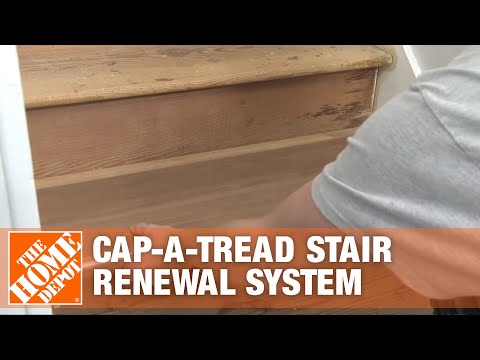
Measure Your Straight Treads with Precision
30 minutesNow, for the straight portions of your L-shaped staircase, let's get those measurements. You'll need the width and depth of each individual step. A crucial tip: Always measure the tread surface itself, from edge to edge, not from the wall to the wall. Why? Because the walls around corners often aren't perfectly square, and this ensures a snug fit. Don't forget to account for any existing trim or the rounded front edge of the step (the 'overhang'). We recommend numbering each tread with a piece of painter's tape as you go—this simple trick prevents mix-ups and makes installation a breeze.
Watch: Measure Treads and Mark Laminate
Tackle the Corner: Landings vs. Winders
20 minutesThis is where your observation from Step 1 pays off. If you have a landing (a flat platform): Measure its full width and length to be treated as one large rectangular piece. For safety and proper coverage, this landing area must be at least 36 inches deep and as wide as the stairs leading to it. If you have winder steps (angled, wedge-shaped): These require individual attention. For each winder tread, you must measure its depth, the length of its narrow inner edge (near the turn), and the length of its wide outer edge. Taking these precise measurements is the secret to achieving that seamless, professional look where safety meets style on every part of your staircase.
Watch: Order Winder Steps and ExtensionsFrequently Asked Questions
What tools and materials do I need specifically for measuring L-shaped stair treads?
You'll primarily need a reliable tape measure, a pencil, and paper or cardboard for templates. A straightedge or speed square can help define clear lines, and a protractor might be useful for checking winder angles. Ensure you have good lighting to see all edges clearly.
What are the most common mistakes when measuring L-shaped stair treads, especially with landings or winders?
Common mistakes include not accounting for existing nosing overhangs, inconsistent measurements across the width of a tread, or miscalculating the angles and unique shapes of winder treads. Always measure each tread individually and double-check your figures, especially for the corner sections.
How do I measure a flat landing differently from angled winder steps?
For a flat landing, measure its overall rectangular dimensions (length and width) at multiple points to confirm consistency. For angled winder steps, each tread is often a unique trapezoidal or triangular shape; you'll need to measure all sides and angles, and creating individual cardboard templates for these is highly recommended.
What safety precautions should I take while measuring my L-shaped staircase?
Prioritize stability: clear the stairs of any obstructions, ensure good lighting, and use a stable step stool or ladder if necessary to reach higher treads. Work carefully to avoid falls, and consider having a helper to hold the tape measure or provide support on trickier steps.
Is measuring L-shaped stair treads really a beginner-level task, and can it be done in 2 hours?
Yes, the process of measuring itself is beginner-friendly, requiring basic tool use. The 2-hour estimate is reasonable for thorough measurement, but complex winder sections requiring detailed templating might extend the time. Take your time to ensure accuracy; rushing can lead to costly material waste.
How can I ensure my measurements are accurate enough for ordering or cutting new treads?
Measure each dimension at least twice, using the same reference points each time. For winder treads, create physical templates from cardboard or paper to dry-fit them on the stairs; this allows you to catch any errors in shape or size before cutting your final tread material.