

how to measure your stairs for carpet treads
About This Project
Ready to make your stairs safer and more stylish, but unsure how to get the measurements right for a perfect fit? You're not alone! This guide will walk you through the simple, DIY-friendly process of measuring your stairs. We'll show you how to account for small variations—common in many homes—to ensure your new Oak Valley Designs treads are custom-made to fit flawlessly, bringing warmth and elegance to your home.
Steps

Step 1: Count Your Treads & Gather Your Gear
5 minutesBefore we begin, walk your staircase and count each individual tread you step on. A fun fact: you'll always have one more riser (the vertical part) than you have treads! Now, let's gather your tools for success. You'll need a quality tape measure, a carpenter's square for checking corners, a level, some masking tape for marking, and a pencil and paper to jot down your numbers. Having everything ready makes the process smooth and stress-free.
Watch: Gather Tools and Materials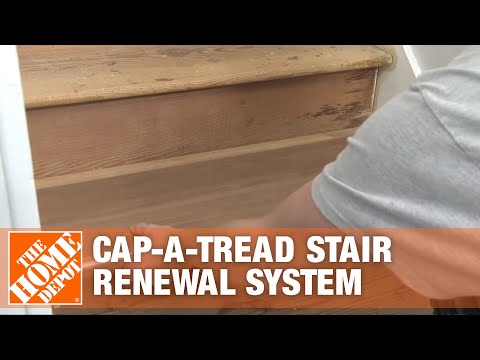
Step 2: Measure the Depth of Each Tread
15 minutesWorking one step at a time, place your tape measure firmly against the riser (the vertical back of the step). Extend it straight out across the tread, going over the rounded front lip, which we call the 'nosing'. A safety-conscious tip: For the most accurate measurement, always measure the bare wood. Measuring over old carpet remnants or adhesive can throw off your numbers and compromise the fit. Write down the depth for each individual step.
Watch: Measure Treads and Mark Laminate
Step 3: Measure the Width for a Stylish Fit
15 minutesMeasure the width of your tread from side to side, keeping the tape measure parallel to the riser. If your stairs are between two walls, measure wall-to-wall. If a side is open, measure the full width of the wooden step. A design-conscious tip: Many homeowners prefer a classic bordered look, leaving about 1 inch of exposed wood on either side of the carpet tread. For example, a 36-inch wide stair is a perfect candidate for a 34-inch wide tread. Note the width for every step.
Watch: Measure Stair Tread Width
Step 4: Document and Double-Check for Accuracy
10 minutesCreate a simple list, noting the width and depth for every single tread. Don't be surprised if you find slight variations, especially in older homes—it's completely normal! Use small pieces of masking tape to number any steps with unique dimensions. This is the key to getting a truly custom-made to fit result. For extra peace of mind, especially with custom orders, snapping a quick photo of each step can be very helpful. Remember the golden rule of DIY: measure twice, order once. This ensures your project is a success from the start.
Watch: Measure Stair TreadsFrequently Asked Questions
What specific tools will I need to accurately measure my stairs for carpet treads?
You'll primarily need a reliable retractable measuring tape, a pencil or pen, and paper for documentation. A straight edge or carpenter's square can also be helpful for ensuring clean, perpendicular lines, especially if your stairs aren't perfectly square or have irregular edges.
My stairs aren't perfectly uniform. How do I account for slight variations between treads to ensure a perfect fit?
It's crucial to measure each individual tread's depth and width, rather than assuming they are all identical. Document these measurements meticulously, noting any small differences. This approach ensures your custom treads will fit snugly and account for common home variations.
Are there any safety precautions I should take while measuring my stairs?
Always ensure good lighting and clear any clutter from the stairs before you begin. Take your time, watch your footing, and consider having a helper to hold the tape measure or assist with documentation, especially if you have a long flight of stairs.
How long does this measuring project typically take for a beginner, and how difficult is it?
This is a beginner-friendly project that typically takes 30-60 minutes, depending on the number of steps and your speed. The difficulty lies more in precision and attention to detail than in complex skills, so take your time to avoid errors and ensure accurate results.
What are the most common mistakes people make when measuring for carpet treads, and how can I avoid them?
A common mistake is measuring only one tread and assuming all others are the same; always measure each one individually. Another is forgetting to account for the nosing (the overhang) if your treads require it, or not double-checking your numbers before finalizing the order. Always measure twice!
Why is precise measuring so important for carpet treads, and what are the benefits?
Precise measuring ensures your custom carpet treads fit flawlessly, preventing gaps or overhangs that can be tripping hazards or look unprofessional. An accurate fit extends the life of the treads, enhances safety, and significantly improves the aesthetic appeal of your staircase, giving it a custom, tailored look.