

Curved Stair Tread Measurement
About This Project
Have a beautiful curved staircase but worried you can't find treads that fit? You can! Getting the perfect fit for your curved or pie-shaped stairs is a simple DIY project that ensures your new treads look and feel like they were always meant to be there. This guide will walk you through how to measure each unique step to create templates for your custom-made Oak Valley Designs treads, guaranteeing safety meets style on every curve.
Steps

Gather Your Tools for a Perfect Fit
5 minutesTo ensure your custom-made treads fit flawlessly, you'll need a few simple items. A flexible sewing or tailor's tape is ideal for following the curve of each step. You'll also need a protractor or angle finder to capture the precise angle of the curve. For the templates themselves, simple cardboard or kraft paper works perfectly. Don't forget a pencil for tracing. This small amount of prep work is the key to a professional-looking result.
Watch: Measure Stair Tread and Riser
Measure Each Step's Unique Dimensions
30 minutesLet's start measuring! For each step, use your flexible tape to measure the width along its widest part, which is usually the outer edge. Then, measure the depth from the front edge of the step—what we call the 'nosing'—to the back where it meets the riser. Finally, use your angle finder to get the curve's angle. The most important part of this step is consistency; be sure to measure from the same reference points on every single stair. This precision is what allows us to create treads that hug every curve perfectly, giving you peace of mind with every step.
Watch: Measure Individual Stair Components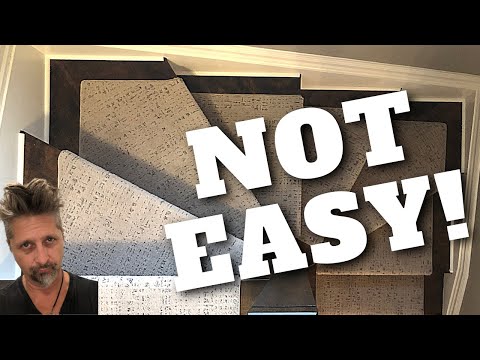
Create and Label Your Templates
60 minutesThis is where the magic happens! For each step, lay your cardboard or paper down and carefully trace its outline, paying close attention to the curve and the nosing (the step's front edge). Cut out your traced shape precisely. Crucially, label each template immediately with its step number (e.g., 'Bottom Step 1', 'Step 2') so there's no confusion. These templates are what our team, right here in Georgia, will use to craft your custom-made treads. Once all your templates are labeled, take clear photos of them to include with your order. This ensures we can bring warmth and elegance to your home with a perfect fit.
Watch: Creating Custom Templates for Each StepFrequently Asked Questions
What essential tools do I need to accurately measure my curved stair treads?
You'll primarily need large sheets of rigid cardboard or thin plywood for templates, a long straightedge, a flexible measuring tape, a pencil, and scissors or a utility knife. A large protractor or angle finder can also be very helpful for capturing precise angles on pie-shaped steps.
How can I ensure my templates are perfectly accurate for custom-made treads?
Trace each step individually and label it clearly, indicating the rise and run direction. Use a consistent reference point for each template, such as the back of the riser, and double-check all measurements before cutting. It's often recommended to slightly oversize your templates, allowing for minor adjustments during installation.
Is measuring curved stair treads a difficult DIY project for a beginner?
While it requires patience and meticulous attention to detail, the process itself is not overly complex for a beginner. The 'intermediate' difficulty comes from the need for precision and careful template creation, as errors can lead to ill-fitting treads. Take your time and focus on one step at a time.
What are common mistakes to avoid when creating templates for curved stair treads?
A common mistake is not fully extending templates under the nosing of the step above, or failing to account for the unique curve of each individual tread. Also, ensure you clearly mark the 'front,' 'back,' and 'side' of each template to avoid confusion when ordering or installing. Don't rush the tracing and cutting process.
How long should I budget for measuring all the treads on a typical curved staircase?
The estimated time is about 3 hours, but this can vary depending on the number of steps and the complexity of their curves. Allocate sufficient time to work slowly and carefully, as rushing can lead to inaccuracies. It's better to take longer and get it right the first time.
Are there any specific safety precautions I should take while measuring my stairs?
Absolutely. Ensure the staircase is clear of obstructions and well-lit. If measuring near the edge of steps, maintain good balance and consider having a helper to steady you or hand you tools. Be careful with utility knives or scissors when cutting templates.