
Bullnose Tread Measurement
About This Project
Have rounded or 'bullnose' stairs and want to ensure a perfect fit for your new treads? Getting the measurement right is the first step toward a beautiful, professional-looking DIY stair remodel. This guide will show you exactly how to measure your rounded stair nose to guarantee a snug, secure fit that brings both safety and style to your home.
Tools & Materials

Classic Sisal - Sample
Classic Sisal - Sample
Sample
Steps
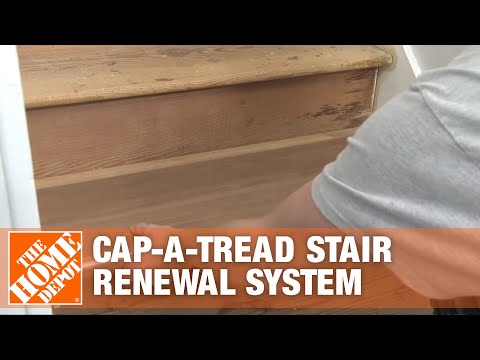
Measure the Total Depth Over the Rounded Nose
5 minutesHere’s the simple trick for a perfect measurement: Place a straightedge flat on your stair tread, making sure it extends from the very back (where the step meets the vertical riser) all the way over the rounded front edge. Now, use your tape measure to find the horizontal distance from the riser face to the very front tip of the straightedge. This single measurement captures the true depth your new tread needs to cover for a secure, gap-free fit.
Watch: Measure Treads and Mark Laminate
Verify Key Dimensions for Safety and Fit
5 minutesFirst, double-check that your stair's nosing overhang is between 3/4 and 1 1/4 inches. An overhang greater than 1 1/4 inches can create a trip hazard, something we always want to avoid, especially for families with children or pets. Also, ensure the radius of the rounded edge is no more than 1/2 inch. Finally, measure the full width of your step from side to side. Our treads are custom-made to fit this dimension, giving you that polished, professional finish.
Watch: Measure the Bullnose Stair
Final Checks: Carpet Pile and Unique Starter Steps
10 minutesThe beautiful pile of a quality carpet tread adds a bit of thickness. To keep your final, installed overhang within that safe 3/4 to 1 1/4 inch range, you may want to subtract the carpet's thickness from your measurement. Does your staircase begin with a wider, curved 'crescent' step? A standard rectangular tread won't work here, but don't worry. This is exactly why we offer solutions that are custom-made to fit the unique shape of your starter step, ensuring a cohesive and elegant look from top to bottom.
Watch: Position Carpet TreadsFrequently Asked Questions
What tools are essential for accurately measuring bullnose stair treads?
You'll primarily need a reliable tape measure, a straightedge or ruler, and a pencil for marking. For checking squareness or angles, a small speed square or digital angle finder can be helpful to ensure your new treads will sit flush and evenly. A flexible measuring tape or tailor's tape can assist with the curve.
What common mistakes should I avoid when measuring bullnose stairs?
A common mistake is not accounting for the entire curve of the bullnose, which can lead to treads that are too short. Always measure the *total depth over the rounded nose* as specified. Also, ensure you measure each step individually, as stairs are rarely perfectly uniform in width or depth.
How does the 'carpet pile' check mentioned in the steps affect my measurements for new treads?
If you're installing new hard treads over existing carpet, you need to measure to where the new tread will firmly rest, accounting for carpet compression or removal. For replacing carpet with new carpet, you'll measure to the sub-tread. Incorrectly accounting for pile can result in gaps or ill-fitting treads.
My stairs have a unique 'starter step' that's larger or oddly shaped. How do I measure that?
Starter steps often require individual attention due to their unique curves and wider designs. Instead of just a tape measure, use builder's paper or thin cardboard to create a precise template of its exact shape. Trace the contours, then transfer these markings to your material for a custom fit.
The project is rated 'beginner' and '5 minutes'. Is it really that quick and easy?
The '5 minutes' estimate refers to the actual measurement process for a standard set of stairs once you understand the technique. While the core task is beginner-friendly, preparing, double-checking, and addressing any unique steps can extend the time. Patience and careful attention to detail are key to accuracy.
How can I double-check my bullnose measurements to ensure they're precise before ordering materials?
To ensure precision, always measure each step multiple times (at least twice) and compare your numbers. A great tip is to create a simple cardboard template for one of your measured steps, including the bullnose curve, and test-fit it on several other steps to confirm consistency and accuracy.